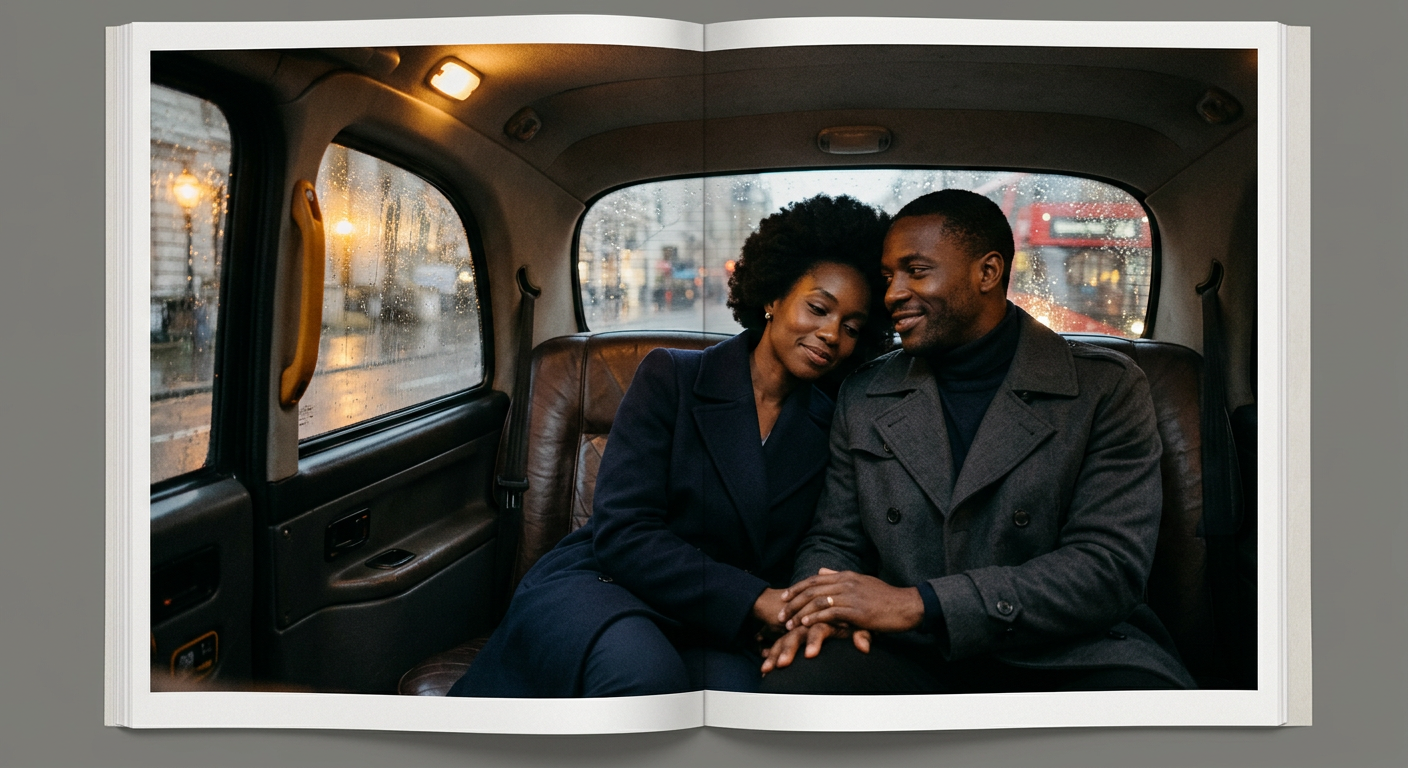
A man in Marylebone once explained to me, over twenty-eight-pound turbot, that he could not date a woman who did not own a passport full of stamps from places where the linen was unironed and the water was turquoise. He called this a 'shared value around curiosity'.
It was not a value. It was an income bracket and an August habit.
We have developed a bad habit of elevating consumer tastes into moral philosophy. We take the things that make our Tuesday evenings pleasant—a specific palate for low-intervention wine, an affection for reformer Pilates, a shared loathing of the Central line in July—and we mistake them for character. Then, when the partnership fractures under the weight of an actual domestic crisis, we wonder why two people who both adore late-period Miles Davis cannot agree on who looks after an ailing mother in Lewisham.
Preferences are how you decorate your days. Values are how you govern your life when the roof falls in.
The Expensive Confusion
Preferences are light. They are portable, negotiable, and prone to shifting every five years. You might prefer someone who reads literary fiction, dresses with quiet restraint, and votes with the sensible centre-left. You might prefer someone who knows the difference between jollof from Accra and jollof from Lagos without feeling the need to start a symposium about it at the dinner table. These things make an evening effortless. They grease the wheels of early company.
Values are heavy. They are the non-negotiable rules of engagement by which you make costly decisions.
Your values are what you do with surplus money: whether you believe it exists to insulate your nuclear family or to support an extended network of cousins, aunts, and church tithes. Your values dictate how you behave when you are insulted, how you speak to a junior waiter when the bill is wrong, whether you tell a hard truth that ruins a weekend or a soft lie that preserves the peace.
A preference asks: Does this feel pleasant right now? A value asks: What is my duty here, and what am I willing to surrender to honour it?
When people say they want someone 'ambitious', they usually mean they want someone whose career confers status and pays for boutique hotels in Puglia. That is a preference. A value is what that person does when ambition demands sixty hours a week away from their children. If one partner values legacy through public achievement and the other values presence through domestic devotion, you do not have a communication problem. You have two irreconcilable definitions of a good life.
The Diaspora Trap
For British-African and British-Caribbean professionals, this confusion carries a specific tax.
We often mistake shared cultural fluency for shared moral architecture. You meet someone who understands the exact cadence of your upbringing. They know why your mother will not answer direct questions on the phone after nine on a Sunday evening. They know how to greet an elder at a traditional wedding in Hertfordshire without looking awkward. The shorthand is intoxicating. It feels like coming home.
Yet cultural literacy is merely a very sophisticated preference. It is shared vocabulary, not shared intent.
Two people can both be raised in strict Nigerian Pentecostal homes or Ghanaian Presbyterian households and emerge with entirely contradictory moral compasses. One may have internalised that sacrifice and deference to family hierarchy are the highest goods; the other may have concluded that autonomy and strict boundaries are the only path to survival. They both know the hymns, they both eat the food, and they will tear each other to pieces over how much money to transfer home every December.
Shared heritage gives you a running start on understanding each other’s jokes. It does not guarantee you agree on what constitutes respect, fidelity, or financial honesty.
The Inconvenience Test
If you want to separate your preferences from your values before you waste three years finding out through quiet despair, watch what happens when an outcome costs something.
Preferences do not demand sacrifice. They demand convenience. If someone says they value health, but only go to the gym when work is quiet, they merely prefer fitness. If someone says they value family, but never spend a bleak Saturday helping a brother move flats in the rain, they simply enjoy having a full Sunday table.
Values are only visible when they are inconvenient.
Here is a diagnostic you can apply tonight:
If you can buy it, acquire it, or outsource it, it is a preference. A clean flat, a gym-honed body, a stylish wardrobe, an address in Islington, a prestigious firm on the CV—these are attributes of circumstance, discipline, and taste.
If it requires self-restraint, repair, or personal exposure, it is a value. The instinct to apologise first after a row. The willingness to live below your means so your partner can change careers. The refusal to mock someone behind their back to earn an easy laugh from friends.
When you sit across a table at a bistro in Soho, stop assessing whether they match your lifestyle mood board. You are not hiring a creative director; you are choosing the person who will hold your medical power of attorney when you are sixty-five.
Ask them how their last close friendship ended. Not the romantic relationships—people have polished scripts for those. Ask about the friend they no longer speak to. Listen for whether they can describe their own failure without turning it into a virtue. That will tell you more about their value system in ten minutes than three years of knowing their favourite holiday destinations.
The Burden of Too Many Demands
Here is the argument that makes modern daters nervous: you have far too many preferences, and you are treating them as holy scripture.
When you treat your preference for a partner who is six-foot-one, works in private equity, and drinks filter coffee as if it were a moral requirement, you eliminate the very people who possess the virtues you actually need: patience, courage, generosity, and humour.
A great marriage can easily survive mismatched taste. You can learn to love the countryside when you thought you were a city creature. You can tolerate their baffling enthusiasm for Formula 1. You can negotiate holidays, paint colours, and how the kitchen is kept.
You cannot negotiate with someone who values self-preservation over the truth. You cannot build a home with someone who values external applause over domestic peace.
Strip away the aesthetic demands. Look past the shoes, the corporate pedigree, and the curated conversational ease. Look for the load-bearing timber beneath the paint. If the timber is sound, you can live with almost any wallpaper.
Questions people ask
- How do I know if one of my non-negotiables is a preference or a value?
- Ask yourself what happens if that trait disappears. If your partner lost their career standing, their physical fitness, or their desire to live in London, would your respect for them collapse? If the answer is yes, you are looking at a preference you have elevated into a condition. A value concerns character: integrity, how they handle hardship, and their capacity for loyalty. If it can be altered by circumstance or money, it is a preference.
- Can two people with different values ever make a relationship work?
- Only if the difference is secondary rather than primary. If you disagree on fundamental principles—such as financial transparency, obligations to extended family, or the boundaries of fidelity—the relationship will experience chronic, corrosive friction. You can easily compromise on lifestyle, but compromising on what you believe to be morally right or necessary will eventually feel like self-betrayal.
- Is it wrong to want a partner who shares my cultural background?
- Not at all. Cultural shorthand, shared humour, and mutual understanding of family expectations are powerful sources of ease and intimacy. The danger is assuming that shared culture automatically means shared values. You must still look at the individual: how they manage conflict, money, and honesty within that cultural context.