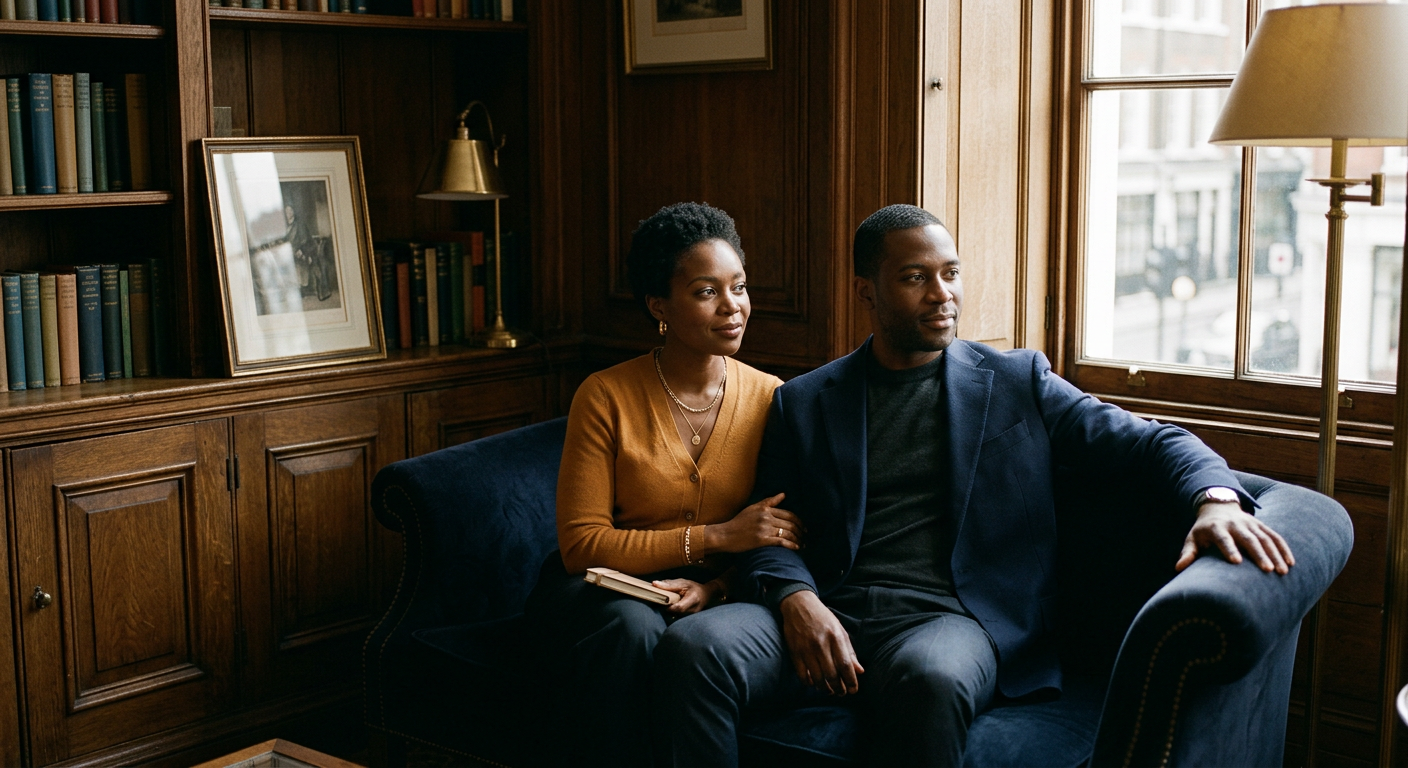
By the fifth month of polite ambiguity, two thirty-four-year-olds with master’s degrees and management responsibilities are usually sitting in a dimly lit wine bar in Bermondsey, performing a very modern kind of madness. Neither will ask where this is going, because to ask is to breach the unspoken contract of modern romance: whoever cares first loses.
So they trade notes on municipal housing policy and sourdough starters, watching the ice melt, while both privately wonder if they are building a life or merely keeping each other warm until spring.
We have confused detachment with sophistication. In the name of autonomy, we have dismantled every collective mechanism our forebears used to organise affection, replacing them with an unwritten etiquette of plausible deniability. To state an intention plainly before the half-year mark is branded unhinged; to introduce a partner to your family before you have signed a joint tenancy is treated as a breach of personal boundary. We have made courtship entirely private, entirely unguided, and entirely high-stakes, then wondered why everyone over thirty in London is quietly exhausted.
It was not always an undercover operation.
Across West African traditions, courtship was never structured as a guessing game carried out by two solitary agents hoping to collide into compatibility. In Akan custom, the sequence begins with kokooko—the knocking on the door. Long before a wedding is mooted, the man’s family calls upon the woman’s with a bottle of schnapps or gin to state a singular, unambiguous fact: we have seen a flower in your garden that we admire, and we wish to ask permission to visit. In the Igbo iku aka, or the preliminary inquiries of a Yoruba introduction, the underlying geometry is identical.
Diaspora conversations around these customs usually flatten them into two equally tiresome tropes. They are either treated as decorative folklore, trotted out for three minutes of choreographed dancing at a reception in Chingford, or dismissed as feudal baggage designed to marry off teenagers. Both readings miss the structural intelligence inside the ritual.
Stripped of the occasional family overreach, the traditional knock solved the three exact pathologies currently breaking modern dating: chronic ambiguity, the indignity of unshared risk, and the misery of the cowardly exit.
The Mercy of Early Clarity
The brilliance of the knock lies in its modesty. It is not an engagement. It is not a promise of eternal fidelity, nor does it demand that the couple choose china patterns by next Tuesday. It is simply the public establishment of a direction.
By laying down that marker, it instantly abolishes the situationship—that bleak contemporary invention where one person extracts the emotional and physical benefits of marriage while retaining the cancellation rights of a rolling monthly gym subscription.
In a London flat, trying to extract a clear statement of intent from someone after eight months feels like staging a delicate diplomatic negotiation. In the traditional framework, intent was not the reward you earned after six months of exemplary behaviour; it was the entry fee. A man did not turn up to a sitting room in New Cross with his uncle and a crate of Malta Guinness to announce that he was looking to keep things casual and see how the energy felt.
Intentionality was not considered heavy or unfashionable. It was the absolute baseline of adult manners.
The Case for Third-Party Vetting
The second virtue we abandoned too hastily is the buffer of the intermediary.
In a Ga or Yoruba context, the young couple was never expected to run an entire private intelligence operation across a table for two. You did not have to spend your Friday evening trying to subtly deduce whether your date had twenty thousand pounds in undisclosed debt, an unmanaged temper, or a habit of borrowing money from relatives and disappearing.
That vetting was outsourced. Uncles spoke to uncles. Trusted friends made quiet inquiries in the hometown or the parish. The lineage was checked not merely for status, but for character: How do they treat people who have nothing to offer them? How do they handle grief? What happens in that house when money runs short?
Today, we force two people to conduct this entire forensic audit while trying to look effortlessly attractive across a bowl of olives. It is an impossible brief. When you ask someone directly about their credit rating, their relationship with their father, or their philosophical non-negotiables, the evening turns into an adversarial cross-examination. Romantic warmth collapses under the weight of risk assessment.
When a community or a trusted third party handles the foundational checks, the couple is spared the friction. You are granted the luxury of genuine discovery because the structural essentials have already been verified by people who are not intoxicated by your date’s profile picture.
Our generation decided that doing all this alone was freedom. In reality, it simply means discovering eighteen months into a relationship that your partner has fundamentally incompatible values, because nobody had the remit to ask before you moved your furniture into their flat.
The Clean Break
Perhaps the most humane aspect of structured courtship is the way it manages failure.
Because traditional courtship moved through clearly defined, public stages—the inquiry, the introduction, the formal consent, the bridal negotiations—each threshold provided an honourable exit. If the preliminary inquiries revealed that the families held irreconcilable views on faith or money, the process halted. A polite message was sent. The token gifts were returned with thanks. Both parties walked away with their dignity entirely intact.
Nobody had to manufacture a sudden crisis at work. Nobody had to slowly lengthen the delay between text messages from twenty minutes to four days, hoping the other person would quietly wither and take the hint.
Ghosting is not a sign of malice; it is the predictable consequence of a dating culture that provides no scripts for ending things cleanly. When society offers no agreed language for a respectful departure, weak people default to evaporation. The old ceremonies gave people an honourable out, because they acknowledged that not every inquiry should end in a union.
Reclaiming the Rails
To see the intelligence in these customs is not to yearn for an era of heavy-handed parental vetoes or lineage snobbery. The goal is not to bring your grandmother to your third date at a restaurant in Soho.
The goal is to stop pretending that romantic hyper-individualism is working.
We can recover the architecture without the suffocating control. That means refusing to give six months of your life to someone who cannot articulate what they want by week four. It means bringing a partner into your actual social ecosystem early, so the people who love you can see how they behave when they aren't on their best behaviour. And it means treating the end of an acquaintance with the promptness and courtesy of an adult, rather than vanishing into the London ether.
Courtship was never meant to be a solo trek through a desert of unreciprocated effort. The old ways put rails around the process not to cage desire, but to ensure that when two people set out to build something durable, neither had to carry the entire house alone.
Questions people ask
- How do you apply traditional courtship pacing without seeming overly intense?
- Clarity is not the same as pressure. You are not asking someone to commit to marriage on date five; you are asking whether they are dating with the intention of building a long-term partnership or merely passing the winter. Stating your own standards calmly and without apology allows the wrong person to opt out early, saving both of you months of quiet resentment.
- How can family or mentors be involved in dating without creating intrusive pressure?
- The distinction is between counsel and veto power. Bring a partner around trusted friends and sensible family members early enough that they see your actual world, but after basic personal compatibility is clear. Listen to the instinctive reactions of people who know your blind spots without surrendering your own agency.